

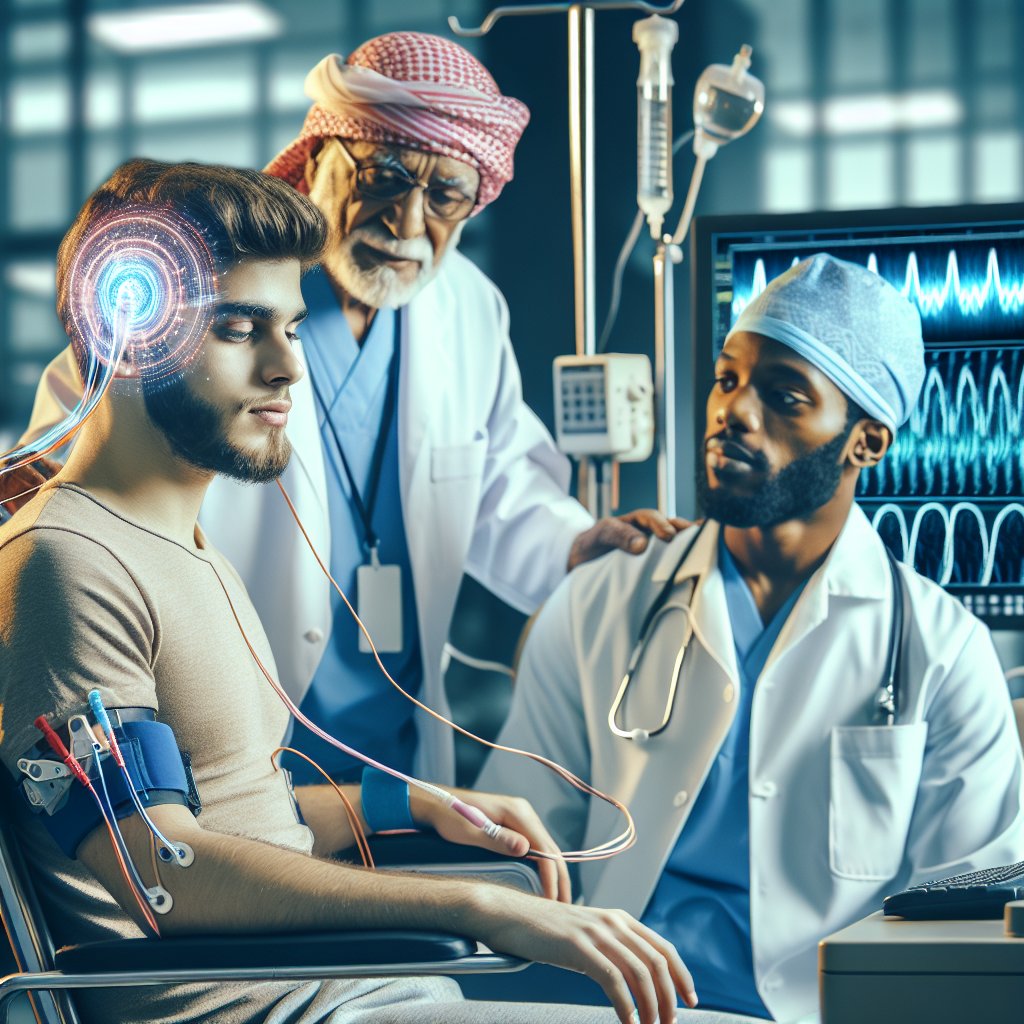
The Challenge of Spinal Cord Injuries
Spinal cord injuries can be devastating, leaving individuals unable to move their limbs despite having healthy nerves and a fully functioning brain. The problem arises from the spinal cord’s inability to transmit signals between the brain and the body. This disconnect has prompted scientists to explore innovative ways to restore this communication without needing to repair the spinal cord itself. After all, nobody wants to go through more surgery than necessary.
Enter the world of brain waves—specifically, electroencephalography (EEG). Researchers from Italy and Switzerland are investigating whether EEG could be the key to bridging this gap. EEG is a noninvasive method that captures brain signals related to movement, offering a potential pathway to reconnect the brain with the body. If these signals can be interpreted correctly, they could be used to stimulate the spinal cord and activate the nerves responsible for movement.
EEG: A Noninvasive Alternative
Traditionally, studies have relied on brain implants to record movement signals directly. While effective, these implants come with risks—surgery, infections, and other complications. EEG, on the other hand, offers a safer option. It involves wearing a cap equipped with electrodes that record brain activity from the scalp, avoiding the need for invasive procedures.
However, using EEG to decode movement attempts is no walk in the park. The electrodes sit on the surface of the head, making it challenging to capture signals originating deeper within the brain—especially for movements involving the legs and feet. The brain’s control over these movements is located more centrally, while arm and hand movements are controlled from areas closer to the scalp. Despite these challenges, the potential benefits of EEG make it a promising avenue for further research.
Harnessing Machine Learning
To tackle the complexity of interpreting EEG data, researchers have turned to machine learning. By employing algorithms designed to work with small and complex datasets, they’ve begun to make sense of the brain’s electrical signals. In their study, patients donned EEG caps while attempting simple movements, allowing the team to record and categorize the resulting brain activity.
The machine learning system was able to distinguish between moments of attempted movement and stillness. However, it struggled to differentiate between specific types of movements. This limitation highlights the need for further refinement of the algorithm. The goal is to enable the system to recognize distinct actions, such as standing, walking, or even climbing—paving the way for more precise interventions.
A Glimpse into the Future
The research team is optimistic about the future of EEG in helping paralyzed patients regain movement. They plan to enhance their algorithm’s ability to interpret specific actions and explore how decoded signals could be used to activate stimulators implanted in patients recovering from spinal cord injuries. This approach could bring noninvasive brain scanning closer to reality, offering a new lease on life for those affected by paralysis.
The journey is far from over, but the potential is enormous. If successful, this method could revolutionize the way we approach spinal cord injuries, providing a safer, noninvasive alternative to existing treatments. For many, this could mean moving beyond the limitations of their injuries and reclaiming their independence—one brain wave at a time.