

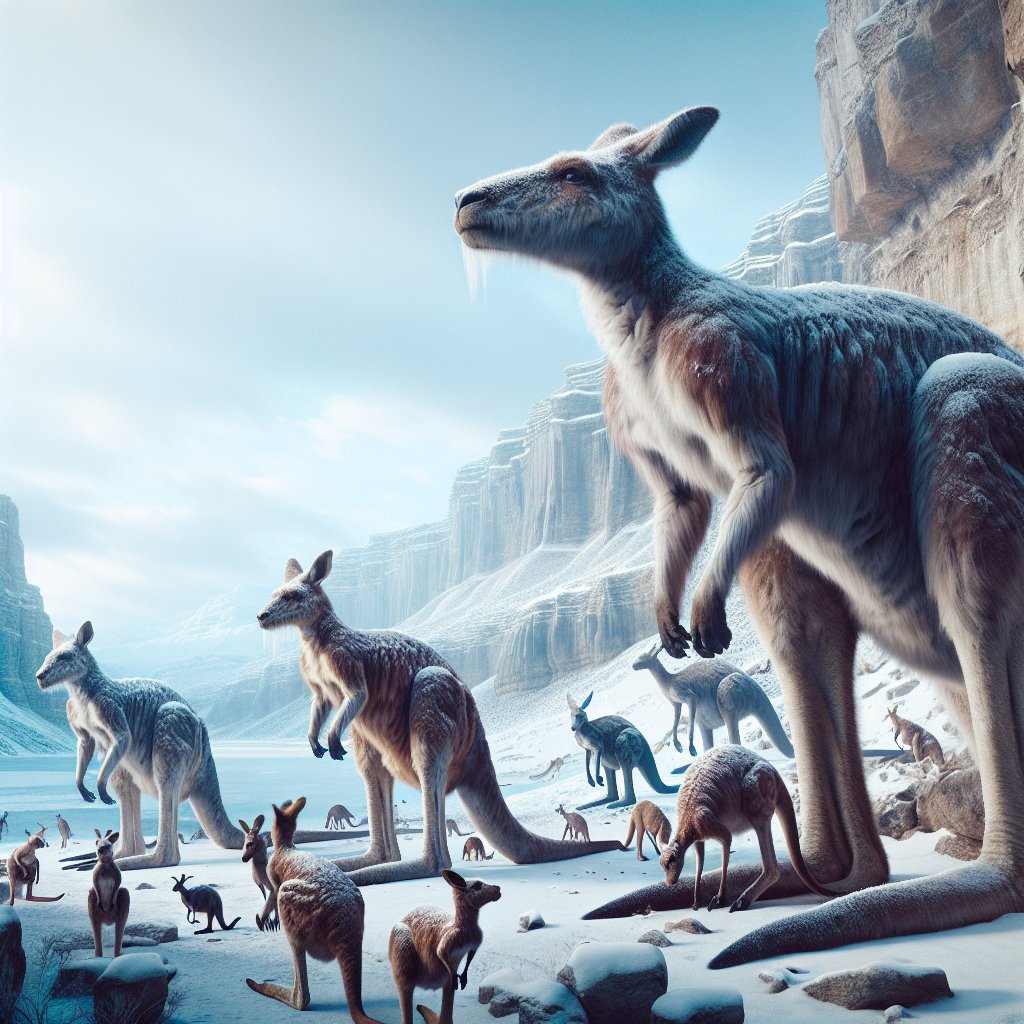
The Surprising Leap of Giant Kangaroos
Picture this: a kangaroo the size of a small car, hopping through the Ice Age landscape. It sounds like a scene from a sci-fi movie, but recent research suggests it might not be far from reality. These ancient giants, some tipping the scales at 250 kilograms, were previously thought too hefty to hop. However, a study from Scientific Reports reveals their leg bones and tendons were robust enough for short bursts of hopping. This challenges the long-held belief that kangaroos over 160 kilograms couldn’t handle the stress of hopping. Instead of lumbering around, these prehistoric powerhouses might have used hopping as a quick escape from predators.
Digging Into the Past: Bones and Tendons
To understand how these massive marsupials moved, Megan Jones and her team examined the hindlimbs of both modern and fossil kangaroos. They analyzed 94 modern specimens and 40 fossil specimens, including the extinct Protemnodon group. By measuring the fourth metatarsal—a key bone in hopping—they assessed if these bones could withstand hopping forces. Spoiler alert: they could. The team also compared heel bones to estimate the size of the Achilles tendon needed to support such weight during hopping. Their findings suggest that both the bones and tendons of these ancient kangaroos were up to the task.
But don’t picture these kangaroos bouncing around like their modern relatives. Due to their size, long-distance hopping would have been inefficient. Instead, they likely relied on short, rapid hops to evade predators. This behavior is similar to some smaller animals today, like hopping rodents and marsupials, which use quick bursts to dodge danger.
Predator Evasion: The Role of Hopping
While these giant kangaroos weren’t marathon hoppers, their ability to hop in short bursts might have been a lifesaver. Imagine being chased by a Thylacoleo, the marsupial lion of the time. A quick hop could mean the difference between becoming dinner or living another day. The study suggests that hopping was a strategic move, not a primary mode of travel. This revelation paints a picture of a dynamic Ice Age ecosystem where even the giants had to be nimble.
The idea of these prehistoric creatures hopping around adds a new layer to our understanding of ancient ecosystems. It challenges the notion that size always dictates movement style. Instead, it highlights how evolution finds ways to adapt, even in the most unexpected ways. Who knew that a giant kangaroo could be such a graceful escape artist?
The Legacy of the Ice Age Hoppers
The discovery that giant kangaroos could hop reshapes our understanding of these ancient creatures. It underscores the adaptability and resilience of life during the Ice Age. These findings not only challenge previous assumptions but also inspire curiosity about what other surprises the prehistoric world holds.
In the grand tapestry of evolution, the ability of these kangaroos to hop shows that nature often defies expectations. It’s a reminder that even the most seemingly cumbersome creatures can have hidden talents. So next time you see a kangaroo, remember its giant ancestors, who, against all odds, might have been the original hoppers of the Ice Age.