
Peering Through Jupiter’s Dense Clouds
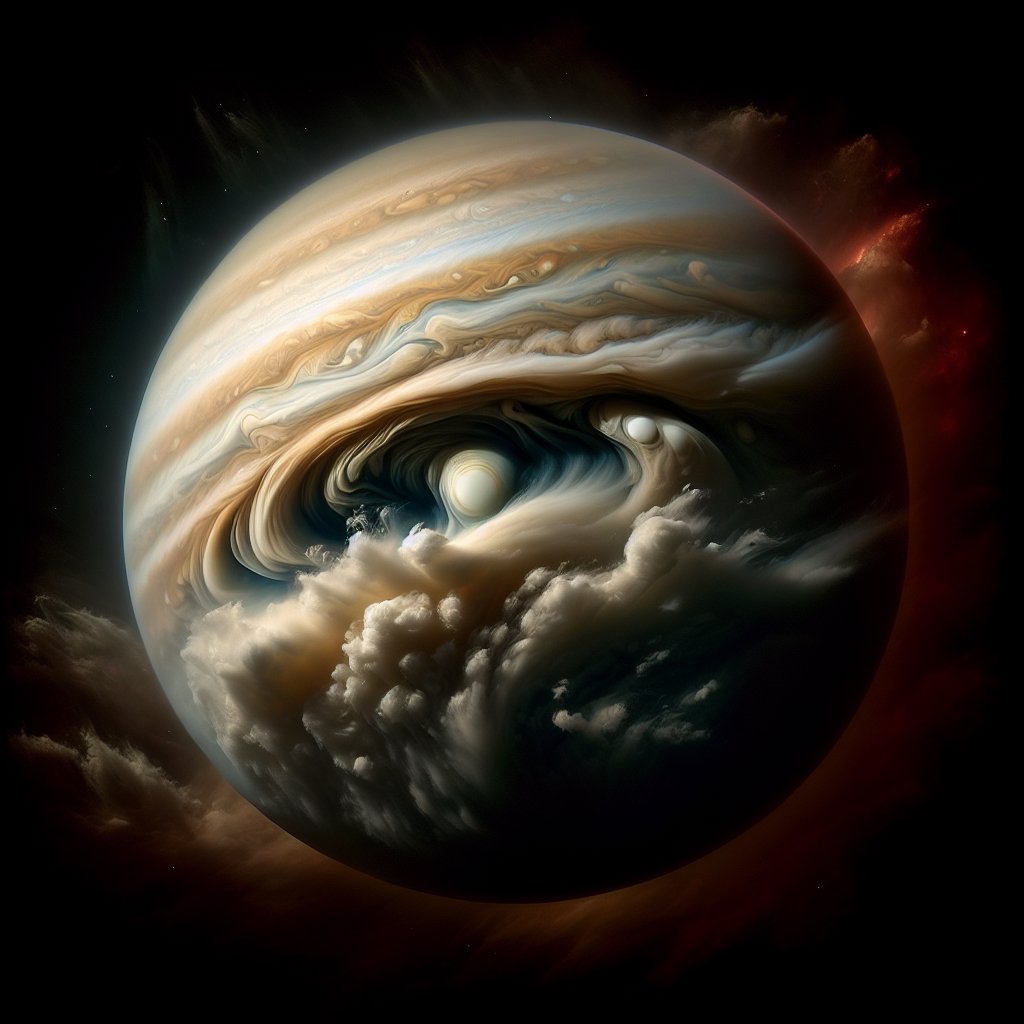
Jupiter, the behemoth of our solar system, is shrouded in mystery, thanks to its thick, swirling clouds. These aren’t your typical fluffy cumulus clouds; they’re dense, formidable, and so deep that no spacecraft has dared to venture beneath them. But thanks to the brainiacs at the University of Chicago and the Jet Propulsion Laboratory, we’re getting a peek beneath the veil. They’ve crafted the most detailed model of Jupiter’s atmosphere to date, letting us snoop around without sending a probe to its doom. Turns out, Jupiter might be hoarding more oxygen than the sun—about one and a half times more, to be precise. This revelation sharpens our understanding of Jupiter’s formation and the grand cosmic dance that shaped our solar system.
This study, published in The Planetary Science Journal, is a testament to how advanced computational models can revolutionize our understanding of other worlds. Jeehyun Yang, the lead author, is thrilled about how these models are transforming planetary studies. It’s a big leap forward, especially when you consider the challenges of studying a planet where the clouds are so dense even NASA’s Galileo spacecraft couldn’t keep in touch with us as it plunged into the atmosphere back in 2003.
The Great Red Spot and Chemical Mysteries
Jupiter’s atmosphere is a spectacle that has fascinated astronomers for centuries. Its most famous feature, the Great Red Spot—a storm twice the size of Earth—has been raging for hundreds of years. Yet, while we can see these storms from afar, the secrets beneath them remain elusive. NASA’s Juno mission is currently orbiting Jupiter, collecting data from a safe distance, but even it can’t fully penetrate the dense cloud cover.
From its vantage point, Juno identifies chemicals like ammonia, methane, and carbon monoxide in the upper atmosphere. These findings, combined with known chemical reactions, help scientists infer what might be happening deeper down. Yet, past studies have often conflicted, particularly regarding the amounts of water and oxygen present. Yang and his team recognized that new modeling techniques could help clear up these discrepancies, offering a clearer picture of Jupiter’s composition.
Unveiling Jupiter’s Atmospheric Secrets
Jupiter’s atmosphere is a complex beast—a chemical labyrinth where molecules dance between scorching depths and cooler heights, constantly changing states and engaging in thousands of reactions. Add clouds and droplets into the mix, and you’ve got a real head-scratcher. To tackle this complexity, Yang’s team combined atmospheric chemistry with hydrodynamics in a single model. This dynamic duo allows them to track chemical reactions alongside the movement of gases and clouds.
This innovative approach has never been done at this level of detail and has led to groundbreaking insights. One of the key revelations is that Jupiter’s oxygen content is about one and a half times that of the sun, contradicting a recent study that suggested a much lower amount. Understanding Jupiter’s oxygen levels is crucial because it provides clues about the planet’s formation and whether it migrated from its original orbit.
A Sluggish and Mysterious Atmosphere
One of the more surprising findings from Yang’s model is that Jupiter’s atmosphere circulates much more sluggishly than previously thought. The vertical movement of gases is far slower than standard assumptions, with diffusion rates being 35 to 40 times slower. Instead of zipping through an atmospheric layer in hours, a molecule might take weeks to make the journey.
This discovery underscores how much we still have to learn about the planets in our own solar neighborhood. It’s a reminder that even the giants among us hold secrets yet to be uncovered. So, next time you look up at the night sky, give a nod to Jupiter—it’s a world of wonder, wrapped in clouds, with secrets waiting to be unraveled.
Facts Worth Knowing
- •💡 Jupiter’s Great Red Spot is a storm twice the size of Earth.
- •💡 Jupiter’s atmosphere may contain one and a half times more oxygen than the sun.
- •💡 Jupiter’s atmospheric circulation is 35 to 40 times slower than previously assumed.