

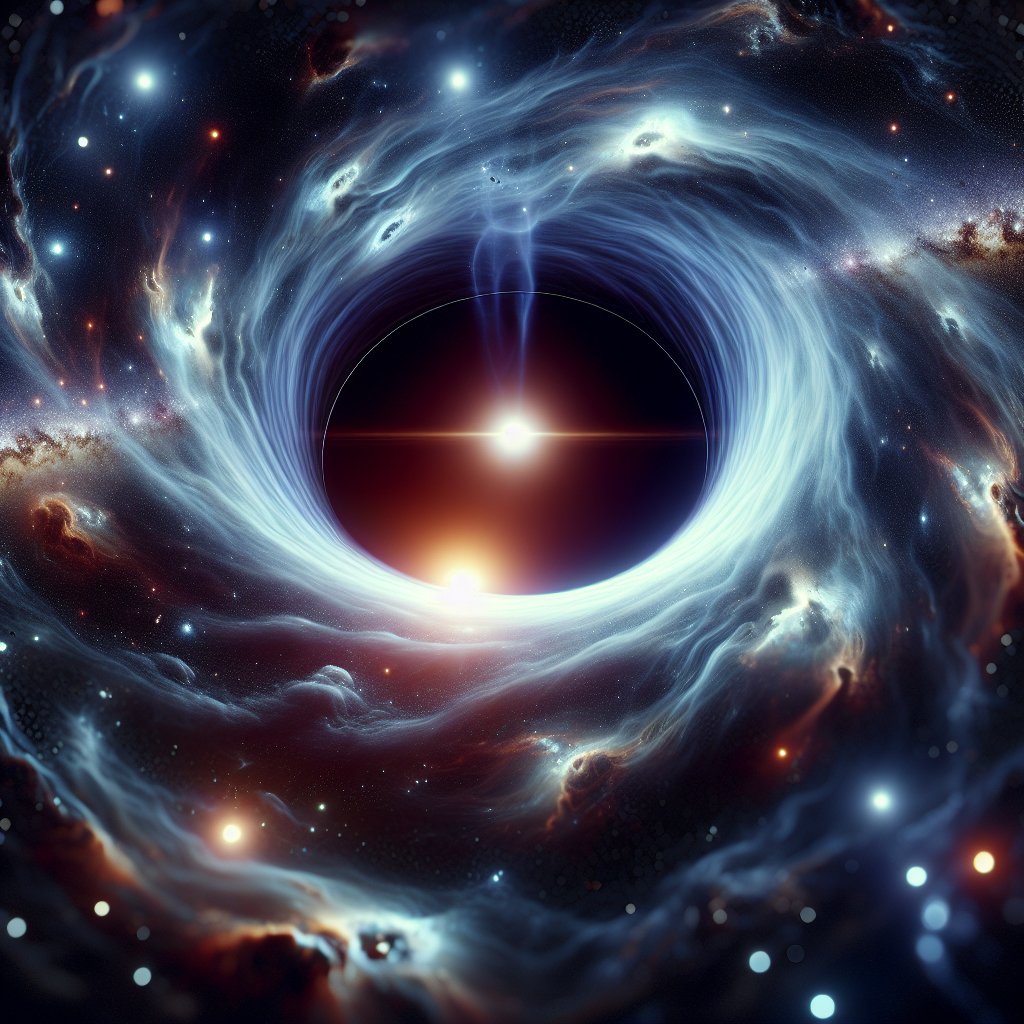
Unveiling the Little Red Dots
When the James Webb Space Telescope (JWST) started beaming back its first high-definition images, astronomers were greeted by peculiar crimson stains in the cosmos. Dubbed the ‘Little Red Dots,’ these objects shone too brightly to be ordinary galaxies and appeared too red to be mere star clusters. They seemed to host supermassive black holes that defied conventional understanding. Initially, these dots were thought to be compact, distant galaxies, but their extraordinary mass raised eyebrows. To be packed entirely with stars, they’d need to achieve a star-forming efficiency of 100%, a feat far beyond the 20% efficiency typical of galaxies.
Cocoon Phase: A New Perspective
Enter the ‘cocoon phase’ theory, a groundbreaking idea published in Nature. Scientists suggest that these young supermassive black holes grow encased in dense gas cocoons. This phase could explain why the Little Red Dots break the usual cosmic rules. Normally, a galaxy’s black hole accounts for about 0.1% of its mass, but these dots were more massive than their host galaxies, suggesting a different growth mechanism. The absence of expected X-ray signals from these dots puzzled researchers, but this new theory offers a neat explanation.
The cocoon, a dense shell of ionized gas, scatters light through Thomson scattering. This process alters the light’s direction and energy, creating a broad spectral line that mimics high-velocity gas. By applying this scattering model, scientists discovered that the black holes are actually much smaller than previously thought. Instead of being ‘overmassive’ anomalies, they’re likely ‘young’ supermassive black holes, aligning more closely with known galaxy-to-black-hole mass ratios.
Implications for Cosmic Evolution
This discovery suggests a previously unknown stage in the evolution of supermassive black holes. The Little Red Dots are akin to cosmic butterflies in their cocoon phase, rapidly growing within a dense gas shell. This cocoon blocks high-energy X-rays and radio waves, explaining their infrared brightness and X-ray invisibility. While the scattering model elegantly addresses the mass and missing X-ray issues, it raises new questions about the duration and prevalence of this phase in the early Universe.
As more data from JWST becomes available, astronomers aim to determine whether all Little Red Dots share this pattern. This could offer insights into the early stages of galaxy formation and the role of supermassive black holes. The findings challenge the ‘chicken or egg’ question of whether galaxies form around black holes or vice versa, providing a fresh perspective on cosmic evolution.
A New Way to Look at the Cosmos
The cocoon phase theory not only sheds light on the Little Red Dots but also opens up new avenues for understanding our own galaxy’s origins. As researchers continue to study these enigmatic objects, they may uncover the secrets of the early Universe. This new model offers a lens through which to view the formation of galaxies and their central black holes.
In the grand tapestry of the cosmos, the cocoon phase represents a critical piece of the puzzle. As astronomers delve deeper into the mysteries of the Universe, the Little Red Dots remind us that there’s always more to discover. The cosmic dance between galaxies and their black holes continues to intrigue, offering a glimpse into the dynamic processes that shape our Universe.
Facts Worth Knowing
- •💡 The ‘Little Red Dots’ were identified as potential supermassive black holes by the JWST.
- •💡 A galaxy’s central black hole typically accounts for about 0.1% of its total mass.
- •💡 The cocoon phase theory suggests black holes grow within dense gas shells, blocking X-rays.