

The Growing Frustration with AI
AI’s rise in popularity has brought along a fair share of headaches. From bizarre responses to steep learning curves, AI can be as frustrating as trying to find a matching pair of socks in a dark room. According to a report from Adobe Acrobat and Firefly, out of 1,008 AI users surveyed, a whopping 91% have thrown in the towel on generative AI tasks, opting for old-school methods instead. Why? Because crafting high-quality AI prompts isn’t as intuitive as one might think. It’s like trying to teach your dog to juggle—possible but requires patience.
Most users have a breaking point. For AI tools generating images, users expect a masterpiece after four tries. By attempt seven, they’re done—like trying to assemble IKEA furniture without instructions. For text tasks, patience wears even thinner. Users want a decent email or social media post by the second attempt and are ready to quit by the fourth. It’s clear: AI is testing our patience, and not everyone is passing the test.
The Gendered Response to AI Frustration
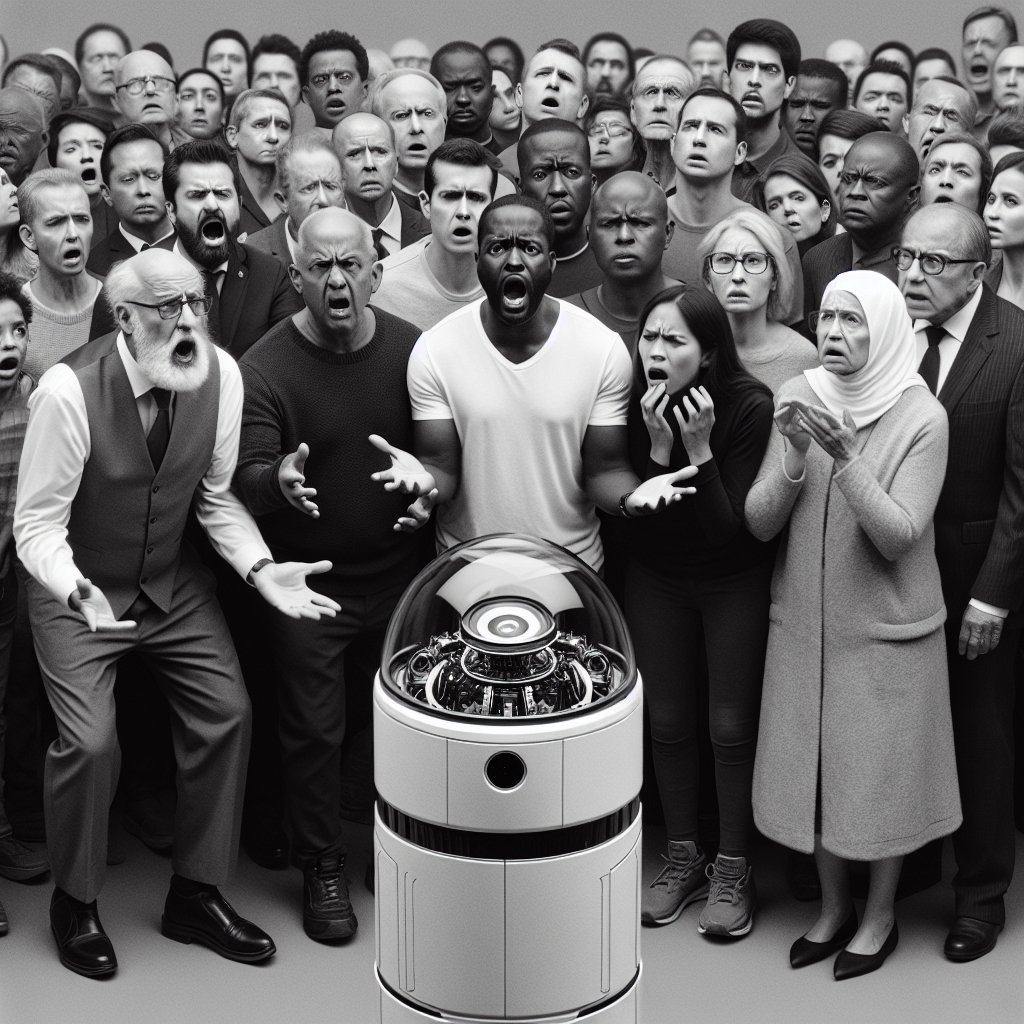
When frustration boils over, some users resort to shouting at their screens—yes, literally. The report highlights a gender divide: men are 80% more likely to ‘shout’ at AI in all caps than women, perhaps believing that yelling will magically improve AI’s performance. It’s like yelling at your car to start when it won’t—therapeutic, maybe, but not particularly effective.
Interestingly, despite being more prone to shouting, men also exude more confidence in their ability to use AI. The report notes that men are 15% more confident in their prompting skills than women. However, this bravado doesn’t necessarily translate into better results—their prompts were only 5% more effective. So, while confidence is high, the skill level might still be in the kiddie pool.
Politeness in AI Interactions
On the flip side, some industries are adopting a more courteous approach to AI interaction. In finance and banking, using polite language like ‘please’ occurs 43% of the time. Education, transportation, and logistics aren’t far behind at 42%. Meanwhile, creative arts and healthcare workers show a bit less politeness, with rates of 38% and 36%, respectively. It seems some sectors are trying to win AI over with kindness—though whether it works is another question.
Despite the politeness, it turns out being nice doesn’t necessarily yield better AI output. The same goes for yelling—neither approach seems to affect the results. So, while saying ‘please’ might make you feel better, it won’t make the AI any smarter. Sorry, gents, but AI doesn’t respond to charm or intimidation.
Strategies to Improve AI Interaction
So, if yelling and pleasantries don’t cut it, what does? According to the report, a few strategies can help keep AI frustrations at bay. Breaking tasks into smaller, manageable steps can prevent you from wanting to throw your computer out the window. Saving effective prompts for future use is another smart move—like keeping a cheat sheet for life.
Fact-checking and providing solid examples can also enhance the quality of AI outputs. While AI might not respond to a stern talking-to, it does respond well to clear, precise instructions. So, while yelling might feel good in the moment, it’s strategy and patience that will ultimately win the AI game. Remember, it’s not the volume of your voice but the clarity of your prompts that counts.