


Understanding Your Receding Hairline: The Norwood Scale Explained
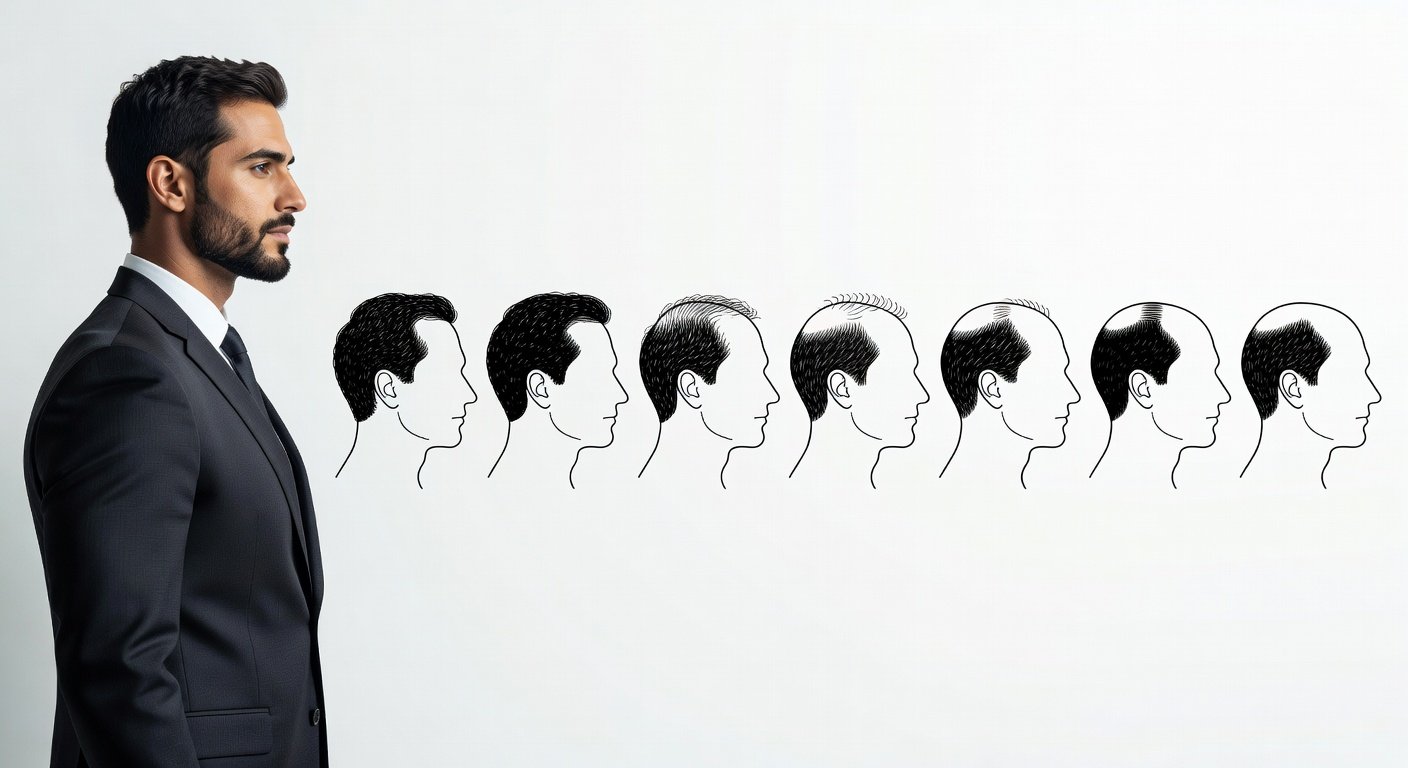
The Norwood Scale serves as the gold standard for classifying male pattern baldness, providing a clear roadmap for understanding where you stand in your hair loss journey. Developed by Dr. James Hamilton and later refined by Dr. O’Tar Norwood, this seven-stage classification system helps men identify their current stage of hair loss and predict future patterns. Stage 1 represents no significant hair loss, while Stage 7 indicates the most advanced form of male pattern baldness. Most men experiencing a receding hairline fall somewhere between stages 2 and 4, where the hairline begins retreating from the temples and forehead. Understanding your position on this scale becomes crucial when deciding between treatment options and acceptance strategies.
Receding hairline men often fixate on their stage progression, but research shows that hair loss patterns vary significantly among individuals. Some men remain at Stage 2 for decades, while others rapidly progress through multiple stages within a few years. The scale also accounts for crown thinning, which can occur independently of frontal recession. Genetics play the primary role in determining your progression speed and final pattern, with factors like stress, nutrition, and hormonal fluctuations serving as secondary influences. Rather than viewing the Norwood Scale as a countdown to baldness, consider it a tool for making informed decisions about your appearance and self-confidence.
Medical Treatment Options: What Actually Works
Finasteride and minoxidil represent the two FDA-approved medications for treating male pattern baldness, each working through different mechanisms to slow hair loss and potentially stimulate regrowth. Finasteride, originally developed for prostate enlargement, blocks the conversion of testosterone to dihydrotestosterone (DHT), the hormone primarily responsible for male pattern baldness. Clinical studies show that finasteride can halt hair loss in approximately 83% of men and produce visible regrowth in about 65% of users. However, the medication comes with potential side effects including decreased libido, erectile dysfunction, and mood changes, which affect roughly 2-4% of users according to clinical trials.
Minoxidil, available as a topical solution or foam, works by increasing blood flow to hair follicles and extending the growth phase of the hair cycle. Originally developed as a blood pressure medication, minoxidil’s hair growth properties were discovered as a side effect. The treatment shows effectiveness in about 60% of users, with results typically becoming visible after 4-6 months of consistent use. Side effects remain minimal for most users, though some experience scalp irritation, unwanted facial hair growth, or temporary increased shedding during the initial weeks. Both medications require lifelong use to maintain benefits, and discontinuation typically results in the loss of any gained hair within 6-12 months.
Hair Transplant Surgery: Modern Techniques and Realistic Expectations
Hair transplant technology has evolved dramatically over the past two decades, with Follicular Unit Extraction (FUE) and Follicular Unit Transplantation (FUT) representing the current gold standards. FUE involves extracting individual hair follicles from the donor area (typically the back and sides of the head) and implanting them in thinning areas, while FUT removes a strip of scalp tissue containing multiple follicles. Modern techniques can achieve remarkably natural-looking results, with skilled surgeons creating hairlines that closely mimic natural growth patterns. Costs typically range from $4,000 to $15,000 depending on the extent of the procedure and geographic location. Success rates hover around 90-95% for follicle survival, though final results take 12-18 months to fully manifest as transplanted hairs go through natural growth cycles.
The Psychology of Hair Loss: Why It Affects Men So Deeply
Hair loss triggers profound psychological responses in many men, often leading to decreased self-esteem, social anxiety, and altered self-perception. Research published in the Journal of the American Academy of Dermatology found that men with male pattern baldness report significantly higher levels of stress and lower quality of life scores compared to their peers with full heads of hair. The psychological impact often exceeds the actual physical change, with many men perceiving themselves as less attractive, older, and less confident than they actually appear to others. This disconnect between self-perception and reality highlights the deeply ingrained cultural associations between hair and masculinity, youth, and attractiveness.
The emotional journey of hair loss typically follows predictable stages similar to grief: denial, anger, bargaining, depression, and eventually acceptance. Many men spend considerable time and money in the bargaining phase, trying various treatments, supplements, and lifestyle changes in hopes of reversing their hair loss. This phase can become particularly costly and emotionally draining when unrealistic expectations meet the biological reality of male pattern baldness. Understanding this psychological progression helps men recognize that their emotional responses are normal and shared by millions of others facing similar changes.
What Women Really Think About Balding Men: Survey Data and Reality
Contrary to many men’s fears, scientific surveys consistently show that baldness has minimal impact on female attraction and relationship satisfaction. A comprehensive study by the University of Pennsylvania found that bald men were perceived as more dominant, stronger, and paradoxically more attractive than their hair-bearing counterparts in certain contexts. The study, which surveyed over 1,000 women, revealed that bald men scored higher on perceived masculinity and leadership qualities. Another survey by Match.com found that 76% of women would date a bald man, with many specifically noting that confidence and personality far outweigh hair status in determining attractiveness.
Research from the University of Barry in Wales took this further, showing photographs of the same men with and without hair to female participants. The bald versions consistently scored higher on perceived dominance, masculinity, and leadership potential, though slightly lower on physical attractiveness. However, when confidence levels were factored into the equation, bald men who appeared self-assured scored equally or higher on overall attractiveness scales. These findings suggest that the key factor isn’t hair presence but rather how men carry themselves regardless of their follicular situation. Women repeatedly emphasize in surveys that confidence, humor, and emotional intelligence trump physical attributes like hair density.

Celebrity Role Models: Bald Men Who Own Their Look
Hollywood and professional sports provide numerous examples of successful, attractive men who’ve embraced baldness as part of their signature look. Actors like Jason Statham, Dwayne Johnson, and Bruce Willis built entire careers while sporting various stages of hair loss, often using their baldness as a strength rather than hiding it. These men demonstrate that confidence and charisma can completely override any perceived disadvantages of hair loss. Their success in romantic roles and action films proves that audiences, including female viewers, find bald men equally compelling as their hair-bearing counterparts. The key lies in owning the look rather than fighting against it or attempting to conceal it with obvious remedies.
Balding Gracefully: Practical Strategies for Embracing Hair Loss
Embracing hair loss requires both practical adjustments and mindset shifts that can actually enhance your overall appearance and confidence. The first step involves honest assessment of your current situation and future trajectory using the Norwood Scale as a guide. Men in stages 3-4 often benefit from shorter hairstyles that work with their natural pattern rather than against it, while those in advanced stages might consider the clean-shaven approach. Professional barbers experienced with thinning hair can provide invaluable guidance on cuts that maximize your remaining hair while creating balanced, attractive looks. The goal shifts from hiding hair loss to creating the most flattering overall appearance possible.
Physical fitness becomes particularly important when embracing baldness, as a well-maintained physique draws attention to your overall health and vitality rather than focusing on your hairline. Many men report that losing hair motivated them to improve other aspects of their appearance, leading to better grooming habits, updated wardrobes, and increased attention to skincare. Facial hair can play a strategic role in balancing facial proportions, with many bald men finding that well-groomed beards or goatees enhance their masculine appeal. The key lies in viewing hair loss as an opportunity to refine your entire aesthetic rather than as a limitation to work around.
Grooming and Style Adaptations for Thinning Hair
Adapting your grooming routine for thinning hair involves strategic choices that enhance your natural features while minimizing obvious signs of hair loss. Shorter cuts generally work better than longer styles that can emphasize thin spots or create unflattering contrasts between thick and sparse areas. Regular trimming becomes crucial as thinning hair often grows unevenly, creating patchy appearances if left unmanaged. Professional stylists recommend cuts that maintain consistent length across the head, avoiding dramatic variations that highlight problem areas. Products like texturizing sprays and matte pomades can add volume and thickness to remaining hair without creating obvious artificial enhancement.
The Financial Reality: Cost of Fighting vs. Accepting Hair Loss
The financial burden of treating hair loss can become substantial over time, with many men spending thousands of dollars annually on medications, supplements, and procedures without guaranteed results. Finasteride costs approximately $200-600 per year depending on brand and insurance coverage, while minoxidil adds another $100-300 annually. Hair transplant procedures represent the largest single expense, often requiring multiple sessions to achieve desired results. When factoring in maintenance medications post-transplant, the total investment can exceed $20,000-30,000 over a decade. These costs compound when considering that most treatments require lifelong commitment to maintain benefits.
Embracing hair loss eliminates these ongoing expenses while potentially redirecting funds toward other appearance-enhancing investments. The money previously allocated to hair loss treatments could fund gym memberships, personal training, wardrobe updates, or other grooming services that provide guaranteed returns on investment. Many men report feeling financially liberated after accepting their hair loss, as they no longer feel pressured to spend money on treatments with uncertain outcomes. This financial freedom often translates to reduced stress and increased confidence, creating a positive feedback loop that enhances overall well-being and attractiveness.
Professional and Social Advantages of Embracing Baldness
Research consistently shows that bald men enjoy certain professional advantages, particularly in leadership roles and competitive business environments. Studies from the Wharton School of Business found that bald men are perceived as more dominant, confident, and capable of leadership compared to their hair-bearing counterparts. This perception translates to real-world advantages in negotiations, management positions, and entrepreneurial ventures. The association between baldness and maturity can also benefit men in industries where experience and wisdom are valued over youthful appearance. Many successful executives report that embracing their baldness early in their careers helped establish their professional credibility.
Socially, men who confidently embrace their hair loss often find that it becomes a non-issue in their personal relationships and social interactions. The energy previously spent worrying about hair loss can be redirected toward developing personality, skills, and relationships that provide lasting satisfaction. Many men report improved dating experiences after accepting their baldness, as they project greater authenticity and self-assurance. The confidence that comes from self-acceptance proves attractive to potential partners and friends, creating more genuine connections based on personality rather than physical insecurities.
Frequently Asked Questions
At what age do men start losing hair?
Male pattern baldness typically begins in the late teens to early twenties, with about 25% of men showing some hair loss by age 25. By age 35, approximately 66% of men experience some degree of hair loss, and by age 50, about 85% show signs of thinning hair.
Can a receding hairline grow back naturally?
Once hair follicles are lost due to male pattern baldness, they cannot naturally regenerate. However, early-stage hair loss may respond to treatments like finasteride or minoxidil, which can slow progression and potentially stimulate some regrowth in remaining follicles.
Does finasteride actually work for hair loss?
Clinical studies show finasteride stops hair loss progression in about 83% of men and produces visible regrowth in approximately 65% of users. Results typically become apparent after 6-12 months of consistent use, but the medication must be taken indefinitely to maintain benefits.
What is the Norwood scale for hair loss?
The Norwood Scale is a seven-stage classification system used to measure the progression of male pattern baldness. Stage 1 represents no hair loss, while Stage 7 indicates the most advanced baldness pattern, helping men understand their current situation and potential progression.
Do women care about balding men?
Research shows that 76% of women would date a bald man, with many finding bald men more masculine and dominant. Studies indicate that confidence and personality significantly outweigh hair status in determining attractiveness to potential partners.
Ready to Transform Your Approach to Hair Loss?
Whether you choose to treat your receding hairline or embrace it confidently, the key lies in making an informed decision that aligns with your lifestyle and values. Our grooming experts can help you develop a personalized approach to looking and feeling your best, regardless of your hair situation. Contact us today for a consultation that focuses on enhancing your overall appearance and confidence.


